Editor’s note: In December 2025, the new dean of the University of Maryland School of Public Policy sat down with CISSM to reflect on his research on Latin American politics, the Trump administration’s approach to hemispheric security and the importance of policy schools and applied research in making domestic and international challenges more tractable and solvable. The article below distills insights from that conversation, edited for clarity and brevity.
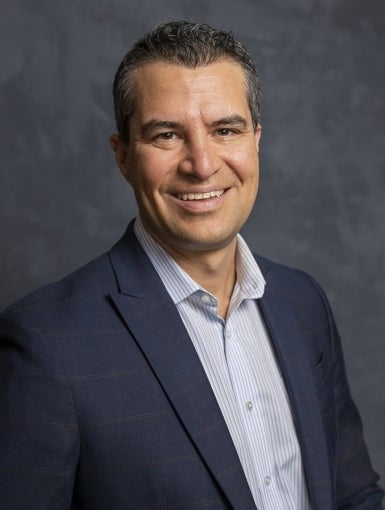
Gustavo Flores-Macías credits his childhood with having an outsized influence on his path as a scholar-practitioner. “I grew up in Mexico during a time of economic crisis…and democratic transition,” he recalled. “My most vivid memories from early on had to do with pro-democracy demonstrations in the 1980s.” Those experiences shaped how Flores-Macías understands concepts of power, governance and the responsibilities of the state–perspectives that now anchor his research agenda and inform his vision as the new dean of the University of Maryland School of Public Policy.
With early ambitions of becoming a diplomat, Flores-Macías earned a Master of Public Policy and a PhD in comparative government. His initial scholarship examined party systems and economic reform in Latin America. Over time, his work evolved toward a set of interconnected questions: how states raise revenue, provide public safety and respond under pressure.
One inflection point came when Flores-Macías encountered a surprising case in Colombia—a “war tax” adopted to fund the fight against the FARC (the Revolutionary Armed Forces of Colombia). “What fascinated me,” he said, “was that this tax worked in a context of weak institutions and widespread tax evasion.” That puzzle launched a broader research agenda at the intersection of taxation, public safety, civil conflict and state capacity—that continues to shape his work today.
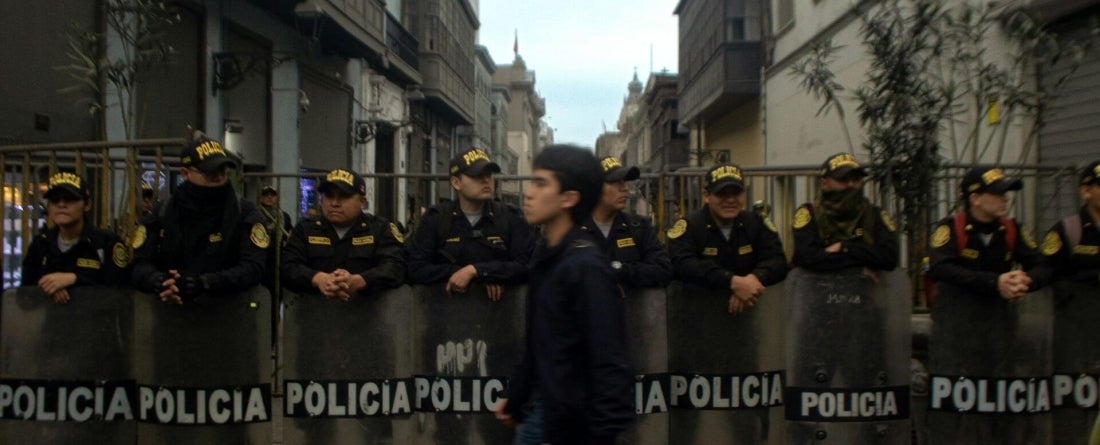
As violence and insecurity intensified across Latin America, Flores-Macías began examining the militarization of policing and the democratic tradeoffs societies face when public safety crises escalate. “Building state capacity for security can be used for democratic ends—or it might not be,” he noted. “In places like El Salvador, people are willing to trade civil liberties for the promise of safety.” Flores-Macías acknowledges the slippery slope inherent in these choices, and his research grapples with how states can invest in effective policing without sacrificing democratic norms.
What makes this work especially timely is how closely those dynamics now resonate in the United States. “We’re seeing a bit of Latin Americanization of the U.S.,” he said, pointing to the growing normalization of deploying the National Guard domestically. “Even when objective crime rates are far lower [in the United States], people are still willing to undermine protections we’ve long taken for granted.”
Moving from local to global, Flores-Macías reflected on how the 2025 National Security Strategy underscores the Trump administration’s renewed interest in the Latin America region after decades of “benign neglect.” “Now, more attention is on the region, but not in a good way,” he said. For many Latin American leaders, the forcible removal of Venezuelan President Nicolás Maduro revived concerns that the U.S. is returning to an older era of “gunboat diplomacy,” willing to intervene unilaterally and militarily with little regard for sovereignty. To those leaders, Flores-Macías argued, the U.S. operation in Venezuela could become a blueprint for combating drug trafficking in other countries, like Mexico and Ecuador, or achieving other U.S. objectives.
In response, Flores-Macías sees three possible paths for Latin American engagement with the United States. Argentina under President Javier Milei represents one approach: trading political alignment with the Trump administration in exchange for economic assistance. “We’ll see how that pays off, it's been two steps forward, one step back thus far,” he said. By contrast, Colombia under President Gustavo Petro has opted for direct confrontation. “I don't think that has gone anywhere, quite frankly,” Flores-Macías reflected. “Petro has had to backpedal, as there is little that Colombia can do to challenge the U.S. White House.” A third option lies in the middle: Mexico’s strategy under President Claudia Sheinbaum, which has accommodated and appeased in the short term to buy itself time to work with the Trump administration. “It's a complicated relationship,” he said, “but I get the sense that this strategy has worked okay for Mexico.”
That ability to draw insights across domestic and international contexts is central to how Flores-Macías thinks about leadership in a school of public policy—and to what attracted him to Maryland. Before arriving at UMD, he held several leadership roles at Cornell University, serving in both its Government Department and its School of Public Policy. Those roles have helped him view research and teaching as mutually reinforcing, not competing missions.
Flores-Macías considers the School of Public Policy as well-positioned to build on its existing strengths to emerge as a premier center for understanding global affairs. The School’s scholar-practitioner ethos, the depth of international expertise across faculty and the university’s land-grant mission all stood out. So did geography. “You’re not just studying policy—you’re in constant conversation with the people shaping it,” he said. The dual emphasis on global and domestic policy is increasingly critical as these challenges overlap more and more. “My research on public safety, democracy and state capacity show why domestic and international policy need to be in constant dialogue,” he noted.
For the new dean, intellectual hubs like the Center for International and Security Studies at Maryland (CISSM) are central to that conversation. CISSM’s role as a convening space—bringing together scholars, students and practitioners around issues like nuclear risk, emerging technologies, human security and global governance—reflects the kind of policy relevant, interdisciplinary research environment he hopes to strengthen. “CISSM exemplifies how rigorous scholarship and real-world engagement can reinforce each other,” he said. “It ensures that research doesn’t stay siloed, but actively informs policy debates and trains the next generation of leaders.”
Looking ahead, Flores-Macías frames the moment in stark but hopeful terms. “The world is on fire,” he said. “People want to understand what’s happening—and they want to act. That’s where schools of public policy need to step up.” His vision is for the School of Public Policy to be top-of-mind as a place that is helping people who make and shape policy make sense of complex, global challenges and work toward practical solutions. With new academic programs, expanding faculty talent and a strong ecosystem of research centers like CISSM, he believes that goal is well within reach. “If not now, when?” he asked. “We have a responsibility to engage these issues seriously, thoughtfully and courageously.”